English
- English
- Español
- Português
- русский
- Français
- 日本語
- Deutsch
- tiếng Việt
- Italiano
- Nederlands
- ภาษาไทย
- Polski
- 한국어
- Svenska
- magyar
- Malay
- বাংলা ভাষার
- Dansk
- Suomi
- हिन्दी
- Pilipino
- Türkçe
- Gaeilge
- العربية
- Indonesia
- Norsk
- تمل
- český
- ελληνικά
- український
- Javanese
- فارسی
- தமிழ்
- తెలుగు
- नेपाली
- Burmese
- български
- ລາວ
- Latine
- Қазақша
- Euskal
- Azərbaycan
- Slovenský jazyk
- Македонски
- Lietuvos
- Eesti Keel
- Română
- Slovenski
- मराठी
- Srpski језик


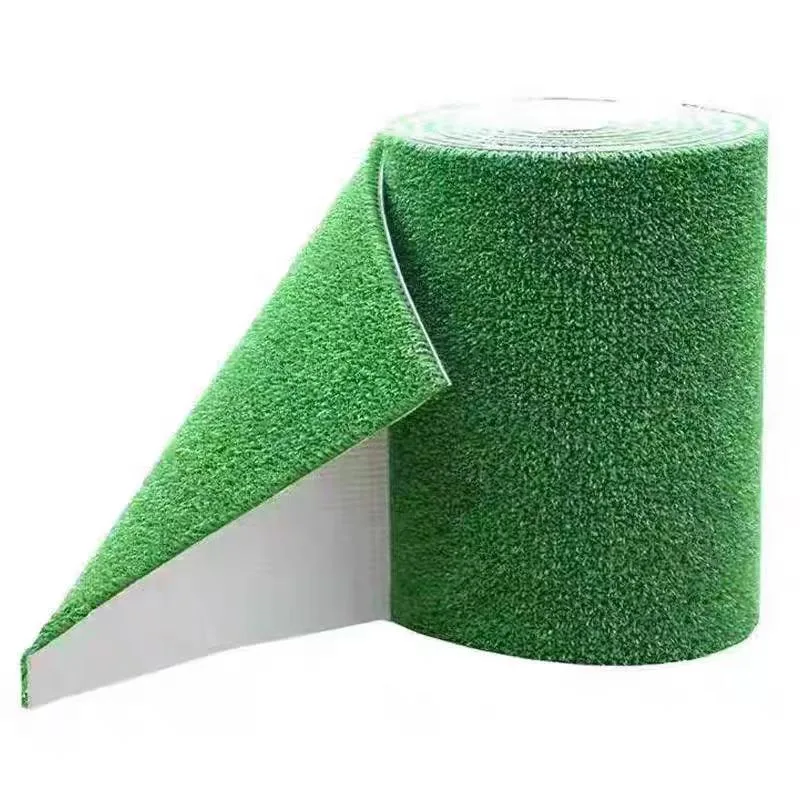
Reinforced and thickened gold-trapping grass mat
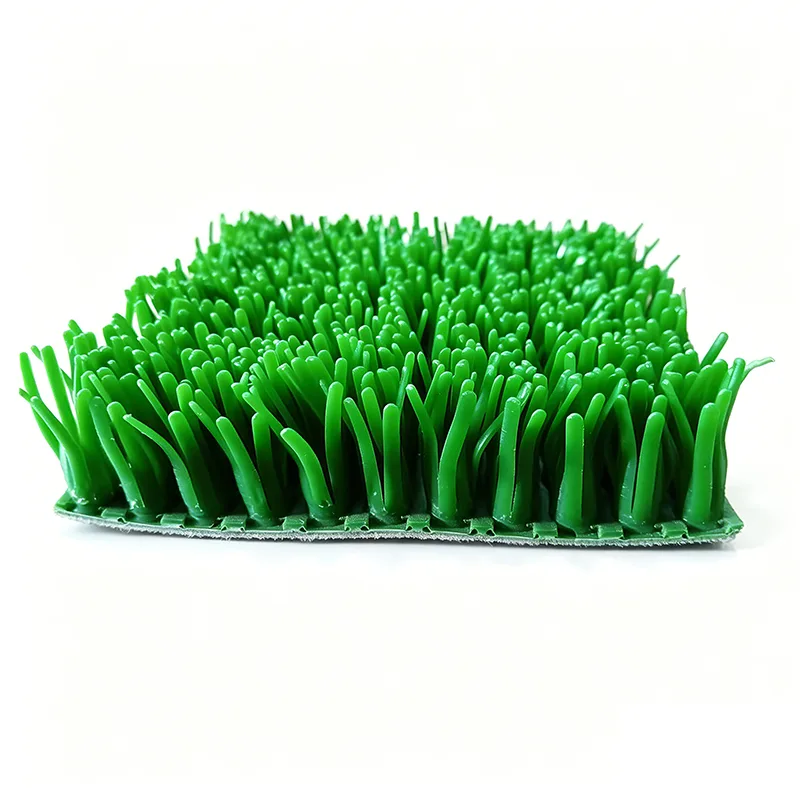
The reinforced, thickened gold-trapping mat manufactured by Cangzhou Juntai Packaging Products Co., Ltd. in China is made of polyethylene (PE). Often referred to as "gold-panning grass," "gold-trapping mat," or "gold-absorbing grass," it is an auxiliary tool widely used in the gold extraction process. It is not an actual plant but rather a synthetic material made from high-strength plastic (such as polyethylene).
The reinforced and thickened gold-plated grass mat produced by Cangzhou Juntian Packaging Products Co., Ltd. in China is not a real plant, but a man-made auxiliary tool widely used in gold extraction operations. It is mainly made of high-strength plastics (such as high-density polyethylene PE), closely resembles green artificial turf in appearance, and is lightweight, wear-resistant, and corrosion-resistant.
The primary function of the gold-trapping mat is the efficient concentration and separation of gold particles.
As a mixture of water and gold-bearing sand flows over the mat, the gold particles—being far denser than ordinary sand and gravel—settle due to gravity and are firmly trapped and held by the dense fibers on the mat's surface. Impurities such as silt and sand are also partially captured by the mat and require periodic cleaning.
Key features of the reinforced, thickened gold-trapping grass mat:
1. High-quality material: Typically made from high-strength plastics such as high-density polyethylene (PE), offering excellent wear, corrosion, and aging resistance, capable of withstanding prolonged scouring by water flow and sediment.
2. Specialized structure: The surface is covered with dense fine bristles or fibers forming a three-dimensional structure, effectively trapping and capturing gold particles with high specific gravity.
3. Diverse specifications: Pile height (fiber length) is a key parameter, with common specifications ranging from 20mm to 30mm. Different heights and fiber types (e.g., straight or curled fibers) are suitable for varying gold particle sizes and flow conditions.
4. Lightweight and durable: The material is lightweight, making it easy to transport, cut, and install.
5. Service life: The reinforced, thickened mat has a service life of 4–6 months under continuous, high-intensity scouring.
Benefits of reinforced, thickened gold-trapping mats:
1. Efficient gold recovery: Compared to traditional methods, the gold recovery rate is significantly higher; while actual recovery depends heavily on factors such as ore particle size, water flow, and silt content, industry-standard claims cite rates exceeding 90%, effectively minimizing gold loss.
2. Ease of operation: The usage process is straightforward—simply cut, lay, and secure the mat according to the sluice box dimensions, then utilize the water flow to begin operation; this effectively reduces manual labor intensity.
3. Economical and eco-friendly: No chemical agents (such as mercury) are required, thereby avoiding environmental pollution and health risks and aligning with green mining principles. Additionally, the material cost is relatively low, and the mats are washable and reusable, lowering overall operational costs.
4. High adaptability: Suitable for a wide range of applications—including placer gold mining, hard-rock gold mining, and tailings recovery—and compatible with various equipment such as gold dredges, vibrating screens, and sluice boxes.
Typical Application Scenarios for Reinforced, Thickened Gold-Trapping Mats
1. Diverse Ore Types and Operational Environments
Gold-trapping mats are suitable for the extraction of various gold resources, including operations involving alluvial gold, lode gold, fine or powdery gold, vein gold, and gold-bearing tailings. Regarding operational environments, they are applicable not only to gold panning in natural waters—such as riverbeds, streams, lakes, and beaches—but also to open-pit and underground gold mining operations.
2. Integration with Core Equipment and Tailings Recovery
In practice, these mats are typically laid within sluice boxes (channels equipped with side walls) and used in conjunction with water flow for separation. They integrate seamlessly with various large-scale gold recovery systems; for instance, they can be installed in the sluices of gold dredges, large gold-processing beds, sand pump systems, and vibrating sluice screens. Additionally, they are specifically utilized for tailings recovery, effectively capturing minute gold particles remaining in waste tailings and thereby enhancing overall resource utilization efficiency.
3. Segmentation based on ore particle size
The application scenarios for gold-trapping mats can be further categorized based on ore particle size and water flow conditions:
Coarse gold scenarios: When mining coarse gold particles or dealing with high-velocity slurry, thicker (approx. 30 mm) and stiffer straight-filament mats are typically selected. These mats offer high resistance to scouring and effectively capture coarse gold.
Fine gold scenarios: When processing fine gold or shallow ore deposits with lower gold content, mats with curled filaments or brushed textures (approx. 20–25 mm thick) are commonly used. These mats create superior turbulent flow zones, resulting in more effective adsorption and capture of minute gold particles.
Key specifications for selecting reinforced, thickened gold-trapping grass mats:
1. Grass pile height: This is the critical factor determining gold recovery efficiency. Mainstream products range from 20mm to 30mm. Generally, 25mm–30mm straight-blade mats are preferred for coarse gold and high-flow conditions; for fine gold, flour gold, or moderate-flow conditions, 20mm–25mm curled-blade or brushed-pile mats are recommended.
2. Material and elasticity: Look for high-strength polyethylene (PE). High-quality grass blades should possess sufficient resilience to bend naturally and disrupt water flow, rather than being stiff and rigid.
3. Backing and construction: The backing thickness should be at least 3mm; a thickened, non-slip backing is ideal to ensure a snug fit against the sluice box without leaving gaps. Products featuring a seamless, single-piece design with secure edge binding offer greater durability.
Use and Maintenance of Reinforced Gold-Trapping Grass Mats:
1. Proper Installation and Water Flow Control: Before use, cut the mat to fit the sluice box dimensions and rinse it thoroughly. Ensure it is laid flat and securely; adjust the water flow velocity and angle to ensure the slurry flows across the surface at a steady, uniform speed.
2. Regular Cleaning to Prevent Silt Accumulation: Periodically remove, shake, and rinse the mat based on the rate of mineral sand buildup (typically every 2–3 hours or after processing 3–4 batches). Promptly clear away trapped silt and sediment to prevent the mat from becoming clogged with mud, which would impair its gold-trapping efficiency.
3. Monitoring Service Life: Gold-trapping grass mats are consumables with a typical service life of 4–6 months. Prolonged use leads to wear on the "grass" fibers, directly reducing performance; therefore, timely replacement is necessary.
Requirements for Customizing Reinforced, Heavy-Duty Gold-Trapping Grass Mats
I. Specification of Key Parameters
1. Pile Height and Filament Type: This is the primary customization criterion. For coarse gold particles, high-velocity water flow, or large-scale gold dredges, specify 25mm–30mm straight-filament mats to ensure abrasion and erosion resistance. If the material consists mainly of fine or flour gold, or if the water flow is gentle, specify 20mm–25mm curled-filament or brushed-pile mats to enhance three-dimensional trapping capabilities.
2. Material and Density: High-strength, high-elasticity pure polyethylene (PE) is mandatory; reject inferior recycled materials prone to breakage or shedding. Customize pile density based on the silt content of the ore: choose a sparse pile for high silt content (to facilitate washing and prevent clogging), and a medium or dense pile for beginners or when processing fine gold.
3. Backing and Construction: The backing must be at least 3mm thick and feature a double-layer, reinforced, non-slip design to ensure a tight fit within the sluice box without lifting or gapping. Edges must be securely finished (overlocked) to prevent unraveling or curling.
II. Dimensions and Appearance Specifications
1. Custom Dimensions: The standard width is typically 1 meter, with lengths usually available in 15-meter or 16-meter rolls. Customers can specify custom lengths and widths—or even request irregular shapes—to match the dimensions of their specific sluices or gold recovery equipment.
Color Options: The standard color is "Spring Green," though some manufacturers offer custom colors such as blue, red, gray, or yellow to meet specific operational or visual identification requirements.
Send Inquiry

Contact Info
-
Address
No. 118, North of Qinghe Line, Nanhuan East Road, Qingxian County, Cangzhou City, Hebei Province, China
-
Tel
-
Email
If you have any enquiry about quotation or cooperation, please feel free to email us at czdongbo@gmail.com or use the following inquiry form. Our sales representative will contact you within 24 hours. Thank you for your interest in our products.
Get a Tailored Quote from Juntai:
- Factory-Direct Precision
- Speed-to-Market Advantage
- Cost-Efficient Customization
- Global Supply Chain Expertise
Your Inquiry Unlocks:
- Free Technical Consultation
- Material Optimization Analysis
- 24-hour Preliminary Quote
- Logistics Cost Benchmarking
Related Products
News Recommendations